
There's a reason these two keep rising to the top.
Red light therapy and grounding are, on their own, two of the most well-researched and widely used tools in modern biohacking and holistic wellness. But there's something that doesn't get talked about nearly enough: what happens when you use them together — intentionally, in sequence, as a protocol.
This isn't about doing more. It's about doing it smarter.
Two Languages. One Conversation.
Your body is electrical. Every cell, every nerve signal, every heartbeat — all of it runs on charge. The problem is that modern life relentlessly pulls us out of electrical balance. Rubber-soled shoes. Synthetic floors. Screens, stress, and constant stimulation. Over time, the body accumulates what researchers call a positive charge surplus — a buildup of free radicals and inflammatory molecules with nowhere to go.
Grounding works by reconnecting you to the Earth's natural electromagnetic field — a field that carries a stable, negative charge. When skin meets a grounded surface (whether that's bare earth, a grounding mat, or a grounding band), free electrons transfer into the body, quietly neutralizing that accumulated charge. Research published in the Journal of Environmental and Public Health found that earthing influences the body's basic biology — reducing inflammation markers, improving sleep, and modulating the autonomic nervous system.
Red light therapy operates on a different but complementary frequency. Near-infrared and red wavelengths (typically 660nm and 850nm) penetrate the skin and are absorbed by the mitochondria — specifically by an enzyme called cytochrome c oxidase. This triggers increased production of ATP, the body's cellular fuel. More ATP means faster tissue repair, reduced oxidative stress, better circulation, and improved skin regeneration.
Here's the key insight: grounding prepares the cellular environment, and red light activates it.
When inflammation is lower and electrical balance is restored, the body's cells are more receptive to photobiomodulation. The two therapies are essentially speaking the same language — they just approach the conversation from opposite directions.
Why the Order (and Timing) Matters
Most people use these tools whenever it's convenient. That works. But if you want to get the most out of both, timing makes a meaningful difference.
Grounding first, then red light — this is the sequence that tends to produce the deepest results. When you ground before a red light session, you're essentially settling the nervous system and reducing inflammatory noise before the cellular activation begins. Think of it like clearing static from a signal before you broadcast.
Morning vs. Evening also changes what you're optimizing for:
- Morning protocols tend to be more activating — red light in the morning supports cortisol awakening response, circadian alignment, and cellular energy for the day ahead. Grounding in the morning helps discharge the accumulated charge from the night and anchors the nervous system before the day picks up speed.
- Evening protocols are more restorative — grounding in the evening supports the shift from sympathetic (fight-or-flight) to parasympathetic (rest-and-repair) nervous system dominance. Red light in the evening, at lower intensity and targeted at sore or inflamed tissue, supports recovery without the stimulating effect that morning sessions can provide.
Neither is wrong. It depends entirely on what your body needs most.
Practical Protocols
These are starting points — not prescriptions. Tune them to your body, your schedule, and your goals.
Protocol 1: The Morning Reset (15–20 minutes)
Best for: energy, mental clarity, circadian rhythm, skin health
- Grounding — 5 to 10 minutes. Upon waking, before caffeine, stand or sit with bare skin in contact with a grounding mat or grounding band. Even sitting at the edge of your bed with your feet on the mat counts. This is about reconnecting the body before you give it any stimulants or inputs.
- Red Light — 10 minutes. Follow immediately with your red light session. A facial mask, handheld wand, or body mat all work beautifully here. Morning is ideal for facial red light (collagen support, skin tone) and general mitochondrial activation.
- Optional add-on: Hydrate with a full glass of water before and after. The body conducts electrical charge better when hydrated.
Protocol 2: The Evening Wind-Down (20–30 minutes)
Best for: sleep quality, muscle recovery, stress reduction, inflammation
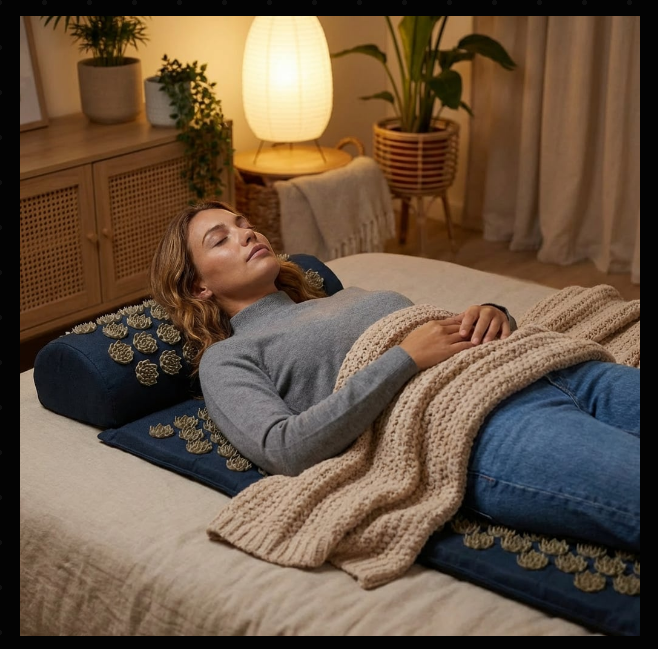
- Grounding — 15 to 20 minutes. This is where a grounding mat really earns its place. Lie down, feet and legs in contact with the mat (a grounding mat placed under your lower body on the couch or floor works beautifully). Let the nervous system shift gears. Breathe slowly. No screens if you can.
- Red Light — 10 minutes. Apply to any areas of muscle soreness, tension, or joint discomfort from the day. Near-infrared light (850nm) penetrates deeper tissue, making it especially effective for recovery and pain support.
- Optional add-on: A few minutes of slow, nasal breathing during grounding accelerates the parasympathetic shift. Some people combine this with a brief body scan or legs-up-the-wall posture to enhance drainage and circulation.
Protocol 3: The Recovery Stack (Post-workout or post-stress)
Best for: muscle soreness, inflammation, injury support, adrenal fatigue
- Grounding — 10 minutes. Immediately post-workout or after a high-stress event. Feet on mat, or whole body grounded if possible. This supports cortisol regulation and helps the body exit the elevated stress state.
- Red Light — 10 to 15 minutes. Targeted to worked muscles or areas of inflammation. Red light in the post-exercise window has been shown to reduce delayed onset muscle soreness (DOMS) and support faster tissue repair.
- Optional add-on: If you're using a grounding mat with infrared capabilities, combining gentle heat here adds another layer — warmth increases microcirculation and further supports nutrient delivery to recovering tissue.
The Format Question: What Tools Work Best for Stacking?
Not all tools are built equally for this kind of protocol work — and the right format can make consistency much easier. The good news is that the variety of formats available now means there's an entry point for every lifestyle and every budget.
For grounding:
- Grounding mats are the workhorse. Lay one on the floor during any red light session so both practices run simultaneously, drape it over the couch for evening wind-downs, or place it at your desk during the day. It's the most flexible option for building the habit.
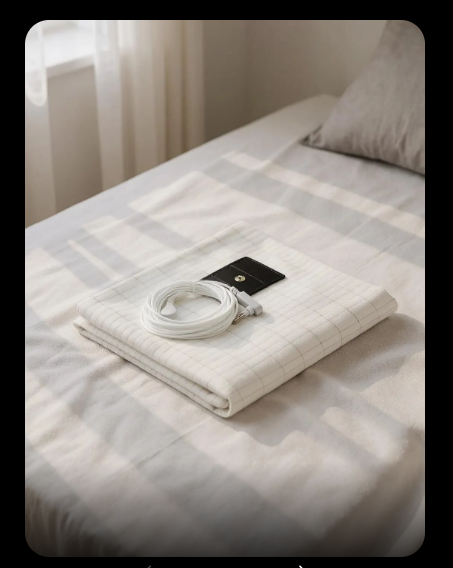
- Grounding bed sheets and pillowcases are the easiest upgrade of all — you're already sleeping, so you might as well be grounding for seven or eight hours while you do it. For people dealing with chronic inflammation, disrupted sleep, or cortisol dysregulation, overnight grounding is often where the most noticeable shifts happen.
- Weighted blankets pair beautifully with the evening protocol — the deep pressure supports nervous system downregulation at the same time grounding is resetting your electrical charge. It's a lot of restoration happening at once, quietly.
For red light:
- Body mats bring red and near-infrared light to large surface areas — back, legs, abdomen — making them ideal for the recovery protocol and for anyone dealing with systemic inflammation or chronic tension patterns.
- Wearable wraps (neck, shoulder, joint-specific) are the most targeted option. If you have a recurring area of tightness or injury, a wrap lets you apply therapeutic light precisely where it's needed while your hands stay free.
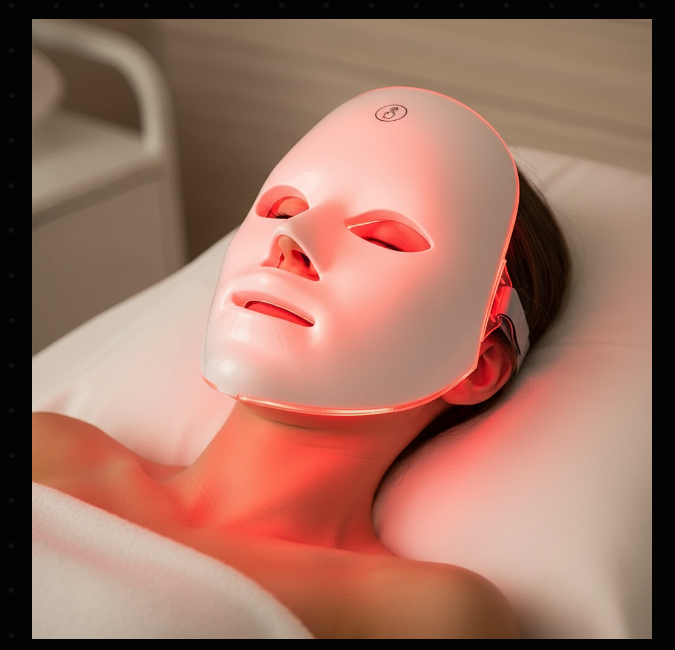
- Facial masks are a natural fit for the morning protocol — ten minutes of red light while you're waking up supports collagen production, reduces morning puffiness, and gives skin a cumulative lift over time.
- Handheld wands and lamps offer pinpoint flexibility. Great for spot treatment, travel, or anyone who wants to start simply before committing to a larger device.
The through line in all of it: consistency beats intensity. Even 10 minutes of grounding and 10 minutes of red light each day will compound over weeks in ways that a single long session once a week won't. Start with the format that fits most naturally into your existing routine — that's always the one you'll actually use.
What to Expect (and When)
People often want a timeline. Here's an honest one:
- Days 1–7: Most people notice improved sleep quality first. Falling asleep faster, waking less, feeling more rested. This is the nervous system and circadian rhythm beginning to recalibrate.
- Weeks 2–4: Reduced morning stiffness, less post-exercise soreness, skin that looks more alive. Energy levels tend to stabilize — fewer afternoon crashes.
- Month 2 and beyond: The more subtle shifts — reduced baseline inflammation, improved mood, better stress resilience, clearer skin tone and texture. These are the results that compound quietly and show up in the way you feel day to day.
There's nothing dramatic about it. That's the point.
A Final Note on Simplicity
Wellness can get complicated fast. More tools, more gadgets, more protocols stacked on protocols until it feels like a second job.
The intention behind stacking red light and grounding isn't to add complexity — it's to use what you already have in a way that works with your body's natural rhythms instead of against them. An hour outside on bare earth would do much of this on its own. But we live in the real world, with floors and shoes and lives that don't always bend toward barefoot mornings in the grass.
These tools exist to close that gap.
Your body already knows how to do this. It's been doing it for as long as humans have walked the Earth. Sometimes it just needs a little help remembering.
Ready to build your stack?
Explore the tools that make these protocols possible — grounding, red light, recovery, and more.
References & Further Reading
- Chevalier, G., Sinatra, S. T., Oschman, J. L., Sokal, K., & Sokal, P. (2012). Earthing: Health implications of reconnecting the human body to the Earth's surface electrons. Journal of Environmental and Public Health, 2012, Article ID 291541.
- Ghaly, M., & Teplitz, D. (2004). The biologic effects of grounding the human body during sleep as measured by cortisol levels and subjective reporting of sleep, pain, and stress. Journal of Alternative and Complementary Medicine, 10(5), 767–776.
- Hamblin, M. R. (2017). Mechanisms and applications of the anti-inflammatory effects of photobiomodulation. AIMS Biophysics, 4(3), 337–361.
- Hamblin, M. R. (2018). Mechanisms and mitochondrial redox signaling in photobiomodulation. Photochemistry and Photobiology, 94(2), 199–212.
- Douris, P., Southard, V., Ferrigi, R., Grauer, J., Katz, D., Nascimento, C., & Podbielski, P. (2006). Effect of phototherapy on delayed onset muscle soreness. Photomedicine and Laser Surgery, 24(3), 377–382.
- Sinatra, S. T., Oschman, J. L., Chevalier, G., & Sinatra, D. (2017). Electric nutrition: The surprising health and healing benefits of biological grounding (earthing). Alternative Therapies in Health and Medicine, 23(5), 8–16.
All peer-reviewed studies listed above can be found by searching author names and titles at pubmed.ncbi.nlm.nih.gov or scholar.google.com.